

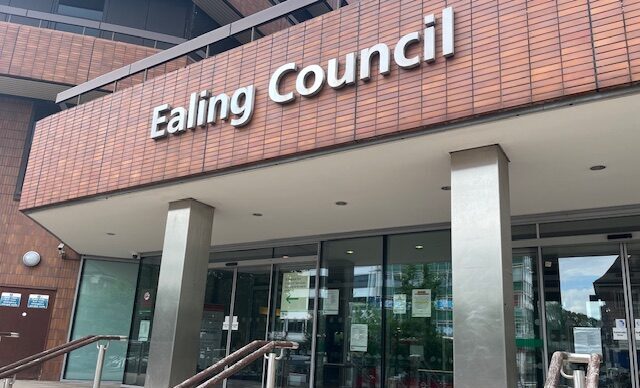
Labour-run Ealing Council has announced a 4.8% rent rise for council tenants from April 2026, while thousands of leaseholders and other homeowners face an average 23% jump in service charges.
The rises have been attacked by Ealing Liberal Democrats, who described the decision as “shocking” during a cost of living crisis and comes after Ealing Council announced plans earlier this month to increase council tax by 4.99%.
Details of the rent and service charge rises are set out in the council’s Housing Revenue Account (HRA) business plan for 2026-27, presented to cabinet on 11 February 2026. Written by Chris Shoubridge, the council’s assistant director of landlord services, it says the changes will take effect from 6 April 2026.
The report states the rent increase follows the government’s formula of consumer price inflation (CPI) plus 1%. With the September 2025 CPI rate at 3.8%, the proposed increase for 2026-27 is 4.8%.
Ealing Council said the average cost of a social rent home in the borough would rise to £127.24 per week.
The HRA business plan covers about 15,500 properties in the borough, including around 4,800 home ownership homes. The report records 9,735 rent accounts and 4,809 homeowner service charge payers which includes 4,664 leaseholders, 89 shared owners and 56 freeholders.
In its report, the council states: “Homeowner service charges will increase by an average of 23% for 2026/27 when compared against the most recent actual costs (2024/25). This is largely driven by a 15% increase in the building insurance premium and 7.2% increase in heating costs.”
Councillor Jon Ball, the Liberal Democrats’ spokesperson on housing and development, criticised the decision. He told EALING.NEWS: “It is shocking that the Labour administration is increasing costs above inflation for council tenants and leaseholders during a cost of living crisis.”
Councillor Ball added: “In particular, the annual service charge increases for leaseholders have reached an astronomical average of 23%, which raises the question of whether the administration has diligently sought best value by tendering for better value insurers and energy suppliers. Ealing residents deserve better value from their council.”
Neil Reynolds, chair of Ealing Green Party told EALING.NEWS: “Labour’s stealth charges will hit tenants and leaseholders hard in the pocket. The failure of the Labour to get the government finances straight, means councils have to make these decisions. Residents can protest this decision by voting for the Green party in May. We would tax the rich fairly, to put people first and prioritise public services.”
The report also notes that support will be available for households facing difficulty paying increased service charges and heating costs, including through the council’s financial inclusion officers and referrals to external organisations.
An Ealing Council spokesperson told EALING.NEWS: “We have applied the consumer price inflation (CPI) + 1%, which the government introduced in its June Spending Review, to social housing rent.
“Despite the forthcoming rise, the rent our social tenants pay is still one of the lowest in London. From April, tenants will pay an average of £127.69 a week for a two-bed home – an increase, of an average, of £5.89. Even after the increase, our rents are still well below those charged by other social landlords in the borough.
“We know that many local families are continuing to feel the effects of the cost-of-living crisis, and for lots of people, every penny counts. Unfortunately, like most other social landlords, we have no choice but to add a small increase to our rent. Years of reductions in funding under previous governments and higher demands placed on landlords by regulators have put severe pressure on all councils’ budgets, and we are no exception.
“The increase will help us invest in our existing housing stock, to build more homes and continue to improve the quality of our services.
“Our financial inclusion team are on hand to provide support to our council tenants. Appointments with them can be booked through our housing hubs.”

