

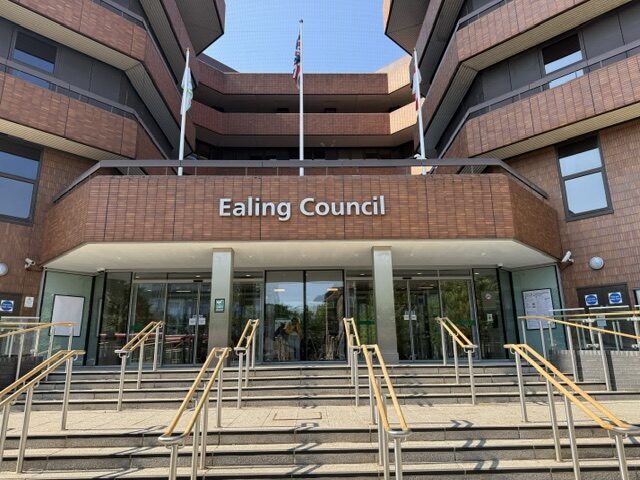
Ealing Council tenants have been left hanging on the telephone for up to 50 minutes to report housing repairs, while missed appointments, unfinished jobs and delays in urgent repairs have raised further concerns about the service they receive.
The delays were revealed at a meeting of Ealing Council’s Housing and Environment Scrutiny Panel on Wednesday (14 October 2026), where councillors questioned Labour-run Ealing Council over missed repairs targets, including appointments not kept, jobs left unfinished after the first visit and urgent repairs completed late.
Figures presented to the panel showed that in August 2026, just 78.5% of repair appointments were kept, while 79.3% of jobs were completed on the first visit. Both fell well short of the council’s 95% target.
Urgent repairs also missed that target, with only 79.7% completed on time.

During the meeting, Councillor Stephanie Ajayi questioned how long residents were waiting for their calls to the housing repairs service to be answered, asking whether the waiting time was between five and ten minutes.
Responding, Samuel Taylor, the council’s assistant director of housing asset management, explained that five to ten minutes was the target rather than the actual waiting time.
He told councillors: “We’ve had it anywhere up to 40 to 50 minutes average wait times.”
Explaining the delays, Mr Taylor said staff had been taken away from answering calls for training ahead of the transition to the new repairs service.
He added: “We’ve seen a drastic improvement over the last few weeks, but ultimately we need to get the staffing levels where they should be to ensure that we’ve got the coverage across the phone lines to reduce those times.”
Mr Taylor also highlighted the need for better communication with tenants about outstanding repairs.
He said: “So that’s where we need to get to longer term is ensuring residents have real time updates on their repairs or other issues that they’re encountering.”
The panel also heard that residents could request a callback rather than remain on hold.
The council introduced its Repairs Diagnostic Centre in August to improve how problems are assessed when residents first make contact, with the aim of sending the right tradesperson to complete the work.
However, its introduction coincided with a deterioration in performance.
Mr Taylor described August as a “perfect storm”, with staff shortages, holidays and sickness disrupting the transition.
Councillors also raised concerns about repairs being recorded as completed when residents believed the problems had not been resolved.
Ben Wilcox, operations manager at repairs contractor Wates, said checks were carried out before jobs were closed, including reviewing photographs and notes submitted by tradespeople.
He acknowledged that mistakes were made and said repair orders could be reopened or further visits arranged.
The council’s tenant satisfaction figures revealed further concerns. Just 25.6% of tenants surveyed were satisfied with complaints handling, while overall satisfaction with the council as a landlord stood at 57.7%.
Satisfaction with repairs was 62.5%.
Speaking to EALING.NEWS, Councillor Gary Malcolm, leader of Ealing Liberal Democrats, criticised the council’s record on housing repairs.
He said: “Liberal Democrats say that Labour-run Ealing Council’s housing stock is in a very poor shape. Independent figures show that tenants are not happy and feel the need to complain more often than many other councils due to the time taken to get both urgent and non urgent repairs fixed.”
He added: “If only a quarter of tenants are satisfied then much more work is needed. The Liberal Democrats have highlighted these issues for four years – why has Labour-run Ealing Council taken so long to make the changes that are needed?”
Questioned about complaints, Mr Taylor said the council had increased its capacity to handle them and improved response times. He said better communication and resolving problems earlier should help prevent complaints arising.
Despite the problems, the council reported that overdue repairs had fallen by 65% compared with July 2025, although the backlog had risen for three consecutive months.
Mr Taylor told councillors that the number of overdue repairs had been around 60 in each of the previous two months. He said the real test would come after winter, when demand for repairs was expected to increase.
Speaking to EALING.NEWS, Councillor Julian Gallant, leader of Ealing Conservatives, welcomed the progress but warned against complacency.
He said: “The improvements are welcome, with a reduction in overdue repairs and £58m Capital Investment Programme, but there can be no complacency. Ealing residents are very aware the Council referred itself to the Regulator of Social Housing in 2022 and achieved only a C2 assessment in 2025.”
He added: “The refreshed Asset Management Strategy 2026-2031, approved by Cabinet on 7 October, sets out a series of good intentions. It’s the results that we’ll carefully monitoring over this council term.”
Mr Taylor said Wates had increased staffing beyond its contractual requirements, although councillors questioned whether improvements could be sustained as the repairs contract approached renewal.
Roger Jarman, chair of the council’s Independent Housing Board, also raised concerns about tenant satisfaction, telling the panel that Ealing was below the London borough median on all but one of its satisfaction measures.
The council is working to improve its housing services after receiving a C2 grading from the Regulator of Social Housing in November 2025, identifying weaknesses requiring improvement.
The meeting heard that the regulator had reduced the frequency of its meetings with the council from monthly to every two months following a review of progress.
EALING.NEWS asked the council why key repairs targets were missed in August, how many appointments were missed and urgent repairs completed late, and whether performance improved in September.
The council’s response did not provide those figures or explain the reasons for the missed targets. It also did not give a timetable for completing delayed housing improvements.
In a statement to EALING.NEWS, Ealing Council said:
“Ealing Council is committed to providing safe, high-quality homes and services for our tenants.
“We have undertaken a comprehensive review of our housing service to understand issues that occur and ensure the necessary improvements are delivered and sustained.
“We are focused on strengthening our governance, data systems, capacity, service delivery and accountability. We have strengthened contractor management processes ensuring operational oversight and accountability across all contracts, which includes contractors being adequately resourced to deliver the services under the contract.
“Another good example is how we are now dealing with complaints, which is part of our performance and improvement plans, where we have consulted with residents and are now publishing quarterly updates on our progress to ensure we are both transparent about the work we are doing and accountable for its delivery. In addition, we also publish an annual complaints performance and improvement report which highlights the significant improvements we have made as well as outlining the root causes of dissatisfaction and the actions we are delivering to address this.
“There are a number of areas where we are performing strongly, including our understanding of the condition of our homes, improvements in compliance and repairs performance, and our compliance with the Neighbourhood and Community and Tenancy Standards. While there are areas requiring improvement, we were delivering a range of services effectively and have positive foundations on which to build.
“We have made significant progress over the last 12 months, particularly with how we have performed in complying with Awaab’s Law. However, we are aware there is still more work to do and we are not complacent. Our focus is on embedding improvements into day-to-day operations, strengthening resident engagement and continuing to improve services. Our ambition is to surpass the highest regulatory standards. Our priority is delivering lasting improvements that give tenants confidence in the safety and quality of the homes and services we provide.”

