


The Woodland Trust has challenged Labour-run Ealing Council along with other local authorities to do more for nature and is calling on the council to call a nature emergency for the borough.
The Trust, which has launched a Nature Emergency Scorecard, has revealed that only 25% of local authorities have declared a nature emergency and only 12% have a nature action plan.
The Trust said that since 1970 UK British wildlife species have been declining by an average of 19% and one in six are at risk of extinction.
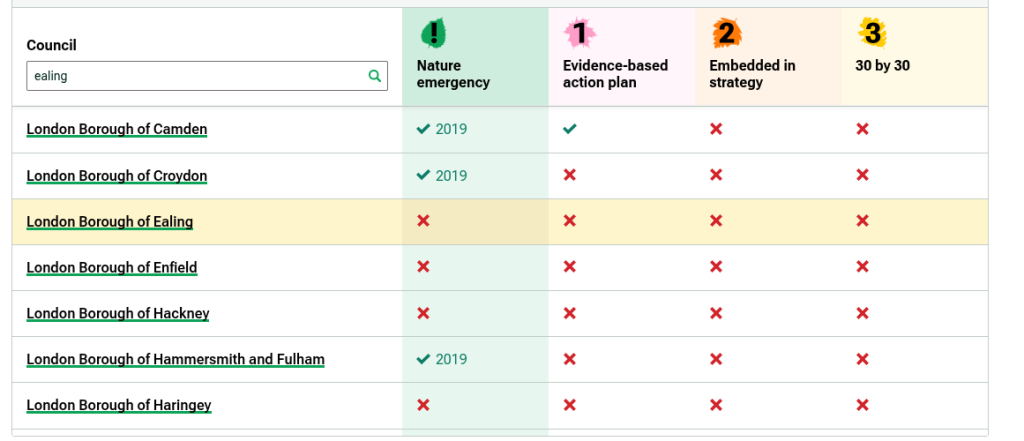
According to its Nature Emergency Scorecard, the Trust revealed that Ealing Council has:
- not declared a nature emergency
- not committed to develop an evidence-based action plan for pushing
nature into recovery - not committed to embed nature’s recovery into all strategic plans and
policy areas - not committed to protect and manage 30% of council landholdings for
nature recovery by 2030
Louise Wilkinson, the Woodland Trust’s nature recovery lead, said: “Local authorities – as landowners, policy makers, and local champions – have a unique role in driving the change that nature urgently needs. Many are not doing enough, and a nature emergency declaration is a vital first step in acknowledging the challenge and turning it into nature recovery on the ground.”
Ms Wilkinson added: “By putting nature on an emergency footing, councils can take meaningful steps to reverse decades of decline and create healthier, greener communities for people and wildlife alike.”
Andy Egan, the Trust’s head of conservation policy said: “The nature crisis is every bit as critical as the climate crisis. We have seen the benefits of local authorities declaring climate emergencies and taking climate action, which is why we are calling on all local authorities to join the 100 trailblazers who have already done so and to make their own nature emergency declaration.”
The Woodland Trust has said it wants to see councils including Ealing “demonstrate commitment to meaningful action for nature’s recovery”.
It is calling for the declarations to be supported by development of a nature emergency action plan, nature’s recovery being embedded into plans and policies and plans to manage 30% of council land for nature recovery by 2030.
Neil Reynolds, chair of Ealing Green Party told EALING.NEWS he welcomed the Nature Emergency scorecard by The Woodland Trust. He said: “The Green Party really supports and welcomes the Woodland Trust’s campaign. We all benefit from nature recovery, it helps fight climate change, clean our air and protects our planet’s future.”
Mr Reynolds added: “Nationally Labour wants to ride roughshod over nature in the planning process, Ealing Council shouldn’t be enthusiastic backers of the government’s attack on nature.”
Councillor Gary Malcolm, leader of Ealing Liberal Democrats said of The Woodland Trust and its Nature Emergency Scorecard: “Often Ealing Council needs pushing to do the right thing on environmental issues. For example the Labour-run council had planned to devastate Warren Farm by destroying about 20 species of flora or fauna.
He added: “The Liberal Democrats successfully raised a motion where we got the Ealing Council to agree that we were having a climate emergency.”
Speaking to EALING.NEWS and addressing The National Trust and the Nature Emergency Scorecard, an Ealing Council spokesperson said: “Nature remains hugely important to us and is one of the five pillars of our Climate and Ecological Emergency Strategy. We have a biodiversity action plan and have been recognised as a national leader of tackling the climate emergency.
“Trees are a key focus in our Climate and Ecological Emergency Strategy, and we’re ahead of our target to plant 50,000 trees by March 2026. 8 Tiny Forests have been planted in parks and schools since 2024. Since 2023, we have created and/or extended four 4 native woodlands, with plans for 2 large sites on track for the next year and planted 6,000 street trees and housing land trees.
“We also have the Ealing Food Partnership which promotes community gardens and food growing, and the council has planned for 10 new community growing spaces during this administration, which in turn creates better habitats for wildlife and allows people to connect with nature.
“Woodland Trust are an important and valued stakeholder, and we have invited them to participate in our climate resilience workshops.”

