

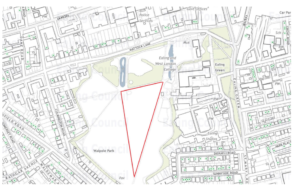
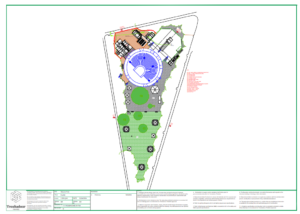
Historical records showing that restrictions on building in Walpole Park were among the conditions attached to public funding for the purchase of the estate in 1899 have been uncovered by campaigners opposing Labour-run Ealing Council’s backing of plans for a temporary 1,200-seat Troubadour theatre that would operate in the park for three years.
In 1899, Ealing Urban District Council, a predecessor of today’s Ealing Council, agreed to buy the former Pitzhanger Manor estate from Sir Spencer Walpole, son of the former Home Secretary, for £40,000.
Minutes from Middlesex County Council, which oversaw county-level services in Ealing at the time, reveal that it agreed to contribute £10,000 towards the purchase, subject to conditions.
At a meeting on 16 March 1899, the council stipulated: “To the whole of the thirty acres being dedicated and maintained as an open space for ever.”
The minutes also set out restrictions on construction, stating: “To no buildings being erected on any part of the land, except with the consent of the County Council, which consent shall only be granted on condition that such buildings be used for purposes ancillary to the use of the land for the above purpose.”
The research also highlights the role of Charles Jones, Ealing’s long-serving surveyor and engineer, who spent nearly 20 years working to secure the former Pitzhanger Manor estate as a public park.
Sue Donnelly, Save Walpole Park campaigner and one of the researchers, said: “Interestingly our initial investigations suggest that Middlesex County Council’s financial contribution was based on terms that the park should remain unbuilt on for generations to come.”
The findings by Save Walpole Park campaigners coincide with the 125th anniversary of Ealing’s first incorporated borough council meeting on Monday (9 November 2026).
The campaigners, who support a theatre in Ealing but oppose building it in Walpole Park, say the historical records strengthen their case. A petition organised by the group against the proposed location received 5,250 signatures.
Save Walpole Park campaigner Karl Woolley said: “It was Jones’ visionary green legacy that we have to thank for Walpole Park and sadly it is this legacy that is now very much at risk with the current council’s Troubadour proposal.”

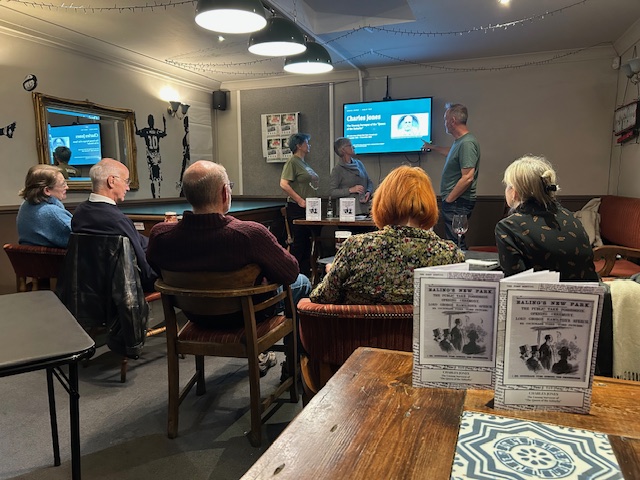
The research was carried out by three members of Save Walpole Park: Sue Donnelly, former head of Archives and Special Collections at the London School of Economics; Julie McQueen, a former television director and researcher; and Marc Goodchild, a former BBC factual television executive producer.
The findings were presented at the Kings Arms in Ealing on Sunday evening (8 November 2026).
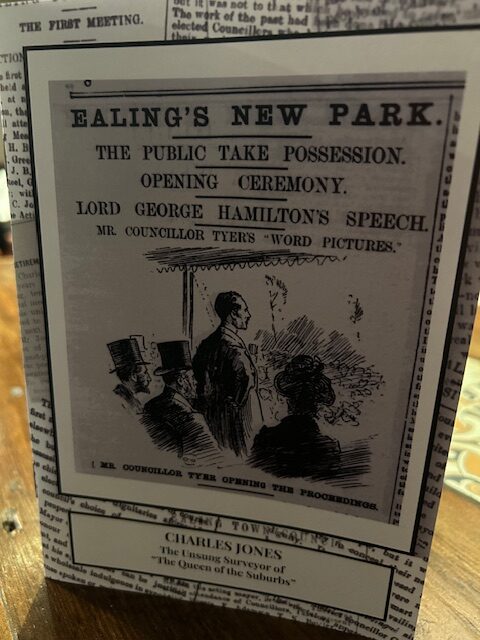
Their work builds on earlier research by Dr Jonathan Oates, Ealing’s borough archivist and local history librarian, who had already established the role of Charles Jones, Ealing’s long-serving surveyor and engineer, in securing the park for public use.
The campaigners examined contemporary newspaper accounts, some digitised as recently as 2023. A report in the Hanwell Gazette and Brentford Observer on 4 May 1901 described councillors’ fears that the former Pitzhanger Manor estate could be sold for housing.
At the park’s opening, Councillor A. T. Tyer recalled the prospect of “red bricks, villas, smoking chimneys” replacing the grounds, with the estate falling into the hands of speculative builders.
The newspaper accounts also describe the efforts of Jones, who spent nearly two decades working towards turning the estate into a public park. At its opening in May 1901, he spoke of finally seeing that ambition realised.
Councillor Tyer told those attending the opening: “We have secured the use and benefit of this beautiful place, not only for ourselves, but for our children and our children’s children, for their enjoyment for ever.”
Further minutes from 22 June 1899 show that Middlesex County Council rejected a proposed change to the restriction on buildings. In November that year, it instructed its solicitor to prepare a deed incorporating the conditions.
The campaigners also found records from 1948 referring to an application for permission to extend the public library at Pitzhanger Manor onto a small area of parkland, in accordance with the terms of the original grant.
Walpole Park opened to the public on 1 May 1901, six months before Ealing’s first incorporated borough council meeting.
Jones, who was born in Beccles, Suffolk, in 1830, moved to Ealing in 1856 and became surveyor to the Ealing Local Board in 1863.
He designed Ealing Town Hall, helped develop the town’s sewerage system and oversaw numerous public buildings as Ealing expanded.
Sue Donnelly, one of the researchers, said: “For 50 years Charles Jones was the man who built Ealing – and in modern day Ealing his monument is still all around us.”
She said Jones and his fellow councillors had been motivated by civic pride and wanted the park to be enjoyed by generations of residents.
Jones remained in public service until 1913. When he announced his retirement, councillors unanimously invited him to become Mayor of Ealing the following year.
He died in August 1913, aged 83, before taking office. A bronze memorial to him stands in Walpole Park.
The campaigners have also been searching for the original documents setting out the terms of the park’s purchase, but have so far found only one page from a copy of the agreement.
Ealing Conservative leader Councillor Julian Gallant has separately asked the council to make the original deeds available.
Ealing Council’s director of legal and democratic services and monitoring officer, James Ellis, confirmed to campaigners on 30 October 2026 that searches for the original deeds were continuing.
He said: “At present I am not able to confirm whether the original conveyance, any supplemental deeds, or related documents have been located.”
Although the county council minutes record the conditions attached to its contribution, the original deed has yet to be located, leaving their current legal status unclear.
The theatre proposal has faced opposition from all three opposition groups on Ealing Council – the Liberal Democrats, Conservatives and Greens – as well as Ealing Central and Acton Labour MP Dr Rupa Huq. At a full council meeting last month (13 October 2026), Labour councillors rejected an opposition motion calling for the plans to be dropped.
Ealing Council leader Councillor Peter Mason defended the proposal for a temporary theatre in the park, saying the borough needed to attract more visitors and support town centre businesses affected by changes in shopping habits.
Councillor Mason said: “Now, we have been shown a proposal and that’s exactly what it is, a proposal. It isn’t perfect, but what it is is temporary.”
He said a temporary theatre would help establish whether Ealing could attract enough audiences to support a permanent venue.
Councillor Mason said: “Before a theatre company is going to invest the tens of millions of pounds that would be required to build a state-of-the-art modern theatre that’s capable of hosting West End shows, they will need to understand whether a community like Ealing can sustain it for the long term.”
He also said the temporary building would be removed whether the venture succeeded or failed.
Councillor Mason said: “If it fails, it goes. If it succeeds, it goes. If we don’t achieve terms with the theatre provider, it won’t happen. If it fails planning, it will not happen.”
The three-year operating period would be accompanied by additional time for construction and removal.
The theatre plans remain subject to public consultation, planning permission and further cabinet approval.
EALING.NEWS has approached Troubadour Theatres for comment on a number of occasions since the plans were announced but has not received a response.
The campaigners’ full historical research report is available to read on the Save Walpole Park website.

