

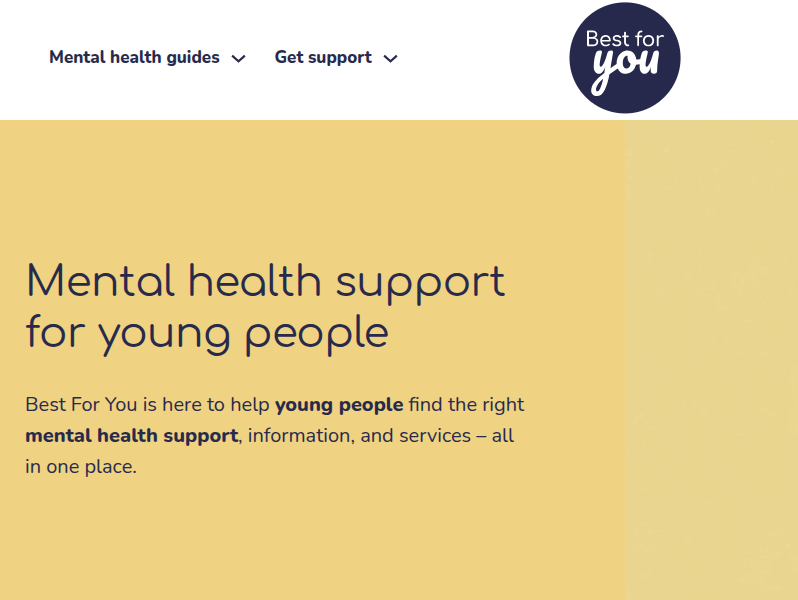
A new NHS-backed website designed to help young people including those living in Ealing find mental health support has launched after research found many do not know where to turn for help.
West London NHS Trust is one of the organisations behind Best For You, alongside NHS charity CW+, which supports innovation and improvements in patient care, and other NHS partners across north west London. The partnership has unveiled a redesigned website and a series of YouTube videos aimed at making trusted mental health information easier to access.
Research commissioned by the programme found that 68% of young people surveyed believed they had experienced one or more mental health difficulties in the past year. However, 31% said they did not know how to get support, while 32% were unsure which service could help with their problem.
The website, which has been co-designed with more than 75 young people and NHS clinicians, provides information on mental health conditions, everyday life challenges, urgent support services, wellbeing apps and NATTER, a free 24-hour text support service.
Alongside the website launch, Best For You has also released five YouTube videos covering topics including autism, depression and eating disorders.
James Porter, director of campaigns and major programmes at CW+, said: “We developed the new Best For You website because young people told us that they wanted access to NHS-assured information that was relevant, accessible, and designed specifically for them.
“Our research showed that 31% of young people don’t know how to get mental health support, so we have created a site that brings together information, digital tools, and links to support services.”
Johan Redelinghuys, clinical director for CAMHS at West London NHS Trust and clinical lead for Best For You Digital, said: “More and more young people are struggling with their mental health without knowing where to get help – while worrying about whether their problems are ‘serious enough’ for them to ask for support.
“Best For You meets young people where they are and responds to what they tell us they need – making sure that NHS-approved support is easier for them to find, understand and trust.”

