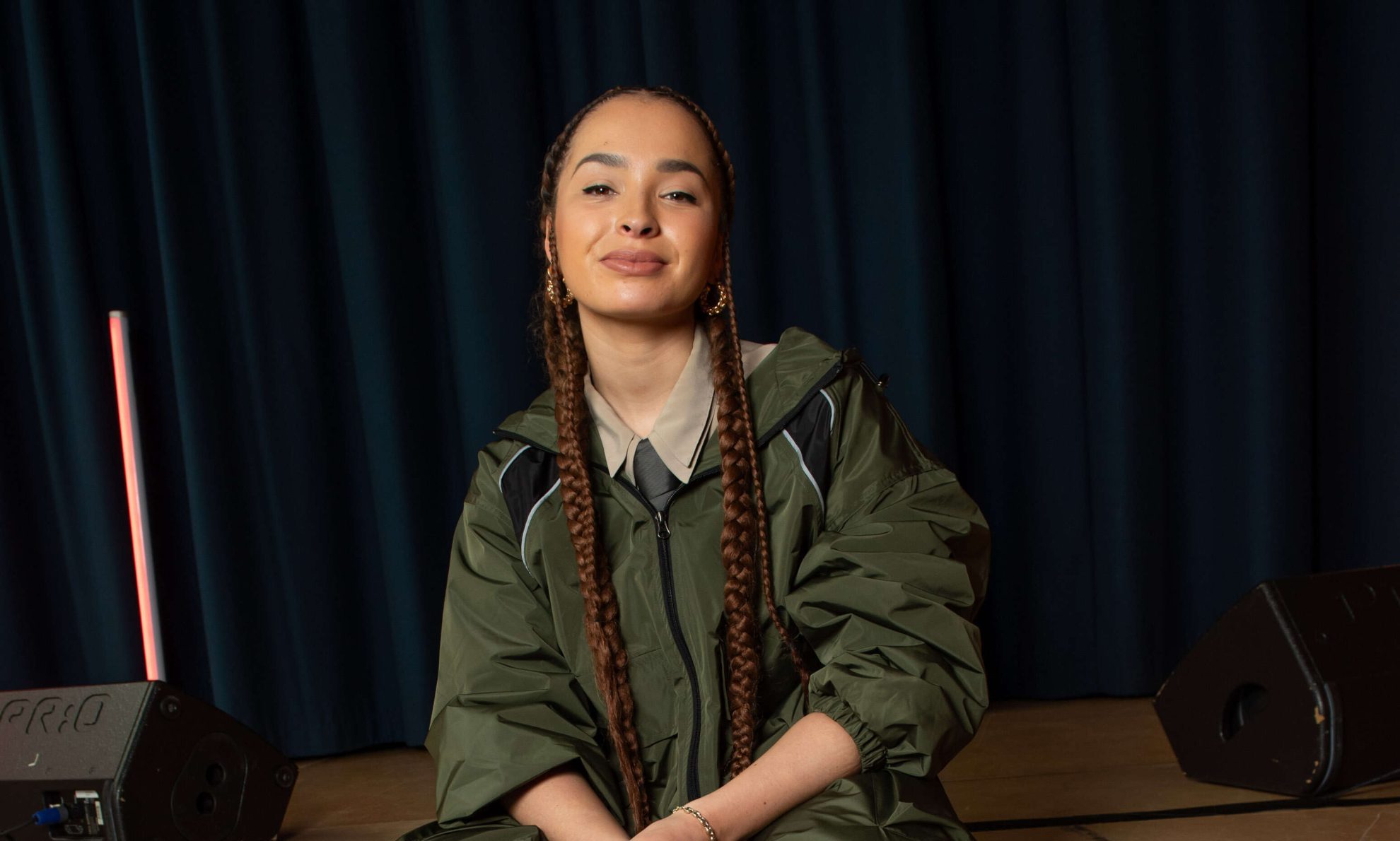
Singer-songwriter and Hanwell native Ella Eyre has been busy with the launch of Mastercard’s Mic Drop Talks — a new nationwide school outreach series to inspire students to explore opportunities in the creative industries.
EALING.NEWS caught up with 31-year-old Ella to learn more about her life in the borough, her creative journey and the advice she has for aspiring artists.
Which part of the London Borough of Ealing did you grow up in and what did you enjoy most about living there?
“I grew up in Hanwell. What did I enjoy the most? I lived really close to the canal, so every weekend or not every weekend, I spent a lot of time playing on the canal with my friends, back in the days when kids actually played on the street.
“I spent a lot of time on the street in Hanwell with the other kids in my area. I’d say maybe the canal was my favourite part about living in that area specifically. I did not enjoy having to get a bus to the tube station every day…. At least you have the Elizabeth Line now. Back in the day, Hanwell station was the most useless station ever. I used to tell people, like, whenever people ask me, like, oh, like, where did you grow up in London? I always say Ealing, yeah, because no one knew where Hanwell was…. At least Ealing Broadway is on the map.”
What is your favourite thing about Ealing?
“I would say how green it is. I live in Islington now, and it’s green too, but it still feels leafier in Ealing. There were a lot of parks I spent a lot of time in, and it just, it did feel like its own little island, Ealing, because I never really left it until I was 11. But yeah, I think how green it is and beautiful parks.
“I love Ealing, and I have a lot of memories there, because obviously I grew up there. A lot of my formative years were in Ealing. But I think I have, like, a resentment towards it, in a sense that, like, I would be on the tube and the bus a lot to get the other side of London. It felt like I’ve had to get a passport to get to like East London…. I just grew up. I had dreams of, like, wanting to be on a Victoria line tube station, and I am now.”
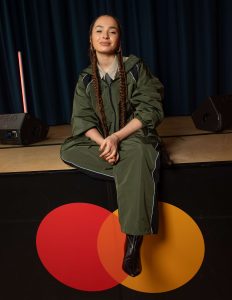
What did it mean to you to be part of the Mastercard Mic Drop Talks?
“What did it mean? I think for me, the older I get, I realise how important it is for the next generation to be able to discover what they’re good at and what they love. Because I feel like I got very lucky at a young age that I could sing, and I had teachers that, you know, felt like I was in the wrong place at the wrong time. So I was advised to go off to different specialist schools, whereas not everybody has that opportunity.
“There’s a lot of kids whose parents don’t have background in the creative music world, and those kids would never even know where to begin to look at, to get into their passion, and they tend to give up. And I feel like that would have absolutely have been me when I was a kid, before I went to the Brit school, if I hadn’t had teachers that recognised my skill. And so, I think it was really important for me to be involved, because I really felt like I was able to hopefully inspire people that are creative.
“Because I think those subjects in school, it might be different now, but there’s not as much pressure put on them, and there’s not as much importance put on them. And so I feel like they sort of feel like the fun dos subjects, but actually they’re very much the potential of people’s careers. There are young people out there that can be incredible writers, incredible photographers, but you don’t learn any of that at school.”
What has been your proudest moment as a musician so far?
“It’s such a hard question to answer, because I would say that I would have different answers for different stages in my life. I would say the proudest moment in general, overall, is the fact that I’m still here. Because I started when I was 16. I had absolutely no idea what I was doing. I was very lucky with the manager that I ended up meeting, who’s still my manager today, because, you know, it’s a very unregulated industry, and at a young age, you can be taken advantage of, and you could just end up going off on down the wrong path and then found yourself in trouble.
“And so I think that the proudest thing for me is that I was able to maintain my ability to make music and have people listen to it, and to put tickets on sale, and for people to want to buy them… I think it’s like 10, maybe like 12 years I’ve been doing music officially, and the fact that I’m still able to be doing it, and for it to be paying my bills, and for it to be something that I love and get so much back from as well, is my proudest moment.”
What’s your favourite part about being a singer?
“I would say my headline shows because I love performing live. That’s absolutely my favourite thing about the job, and my headline shows are always, hopefully mostly hardcore Eyreheads, the OG day ones, and that energy in the room is so lovely because we’re all there for one thing. And it’s like, this common love of the music that I make and… I always cry at headline shows, mainly because I don’t do that many, but I always find myself getting emotional at some point in the show because, like, I’ve had a, you know, some core fans for such a long time now, and it’s so lovely to still see them turning up and putting up signs like they love to surprise me with weird little things that they come up with. And the fact that there are people out there that are so invested in what I do is just incredible and I love being reminded of that. And the more I get to do live, the happier I am.”
If you were to give one piece of advice to your younger self, what would it be?
“I would say, I’m just at the stage in my life, at the moment, where I’m doing a lot of like inner child work, and a lot of reflecting on my childhood, and trauma, and so like I would say that it’s very much in my mind at the moment, like what I would say to my little younger self, and I feel like it’s really important to, what’s the word, curate the right environment for you to flourish.
“And by that, I mean the people that you work with, the friends that you have, the people that you’re inspired by. Like it’s really important to be surrounded by people that are going to help you progress. And you know, you might have a you might have a big, hot shot manager trying to like sign you. But they also might have eight other artists, and you know, you’re not a priority to them, and you might want to go for the lesser-known manager who is going to work…like 24/7 to make sure that you reach your dreams and your goals and so like, yeah, that’s my advice.
“It’s really about the people that you surround yourself, not just professionally, but personally as well. Because when you’re creating, when you’re writing songs, when you’re coming up with concepts and making mood boards, you know, it’s who you bounce off. It’s where you’re getting your inspiration from, as well as, you know, the creative industries.”
And finally, what would you tell to the next generation of creatives who aspire to have a career in the music industry?
“I would say just do what you love and really, really research that, really obsess over it, really like get into the nitty gritty of what you love about it. Because you might love music, you might be a terrible singer, but that doesn’t mean you can’t be an artist.
“You don’t need to be able to even play an instrument, you can produce, or you could be an A&R and help other artists and then curate their albums.
“I think that it’s really important to find what it is that you love and then not be put off by the fact that you might not have the skill that it is that you think you need to work in that industry, because there are so many other departments and jobs, you can even probably make up a job role in this industry. Like I said, it’s so unregulated, it’s just about finding the thing that you love and being passionate about it, and then being the best at it.”

