

Residents in Southall have raised concerns about people openly using drugs in the street following Ealing Council’s relocation of a recovery centre for addicts.
In February 2024, Ealing Council opted to relocate the centre to Southall from West Ealing after residents there “kicked up a fuss” according to a Southall local who raised concerns at a council meeting this week.
Since the relocation, residents say they have seen the number of people “openly making and smoking crack” increase fourfold – the Local Democracy Reporting Service (LDRS) has seen videos which appear to show open drug taking in Southall. Ealing Council says it does not believe the centre’s relocation is to blame for the uptick in visible drug taking.
RISE (Recovery Intervention Service Ealing) is a community service that provides assessments and short-term treatment for addicts. It includes helping people break a cycle of addiction to substances such as heroin, cocaine and alcohol.
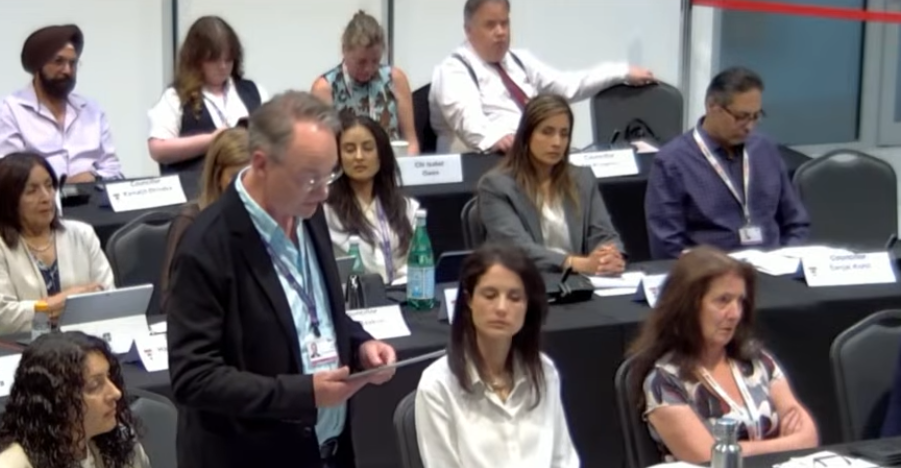
At a meeting of the Full Council on Tuesday (30 June 2026), Herpreet Nirwal, a resident of Southall, asked Cllr Paul Driscoll, Cabinet Member for Healthy Equal Lives: “What justification does the Cabinet Member offer for approving RISE’s relocation to Southall in the absence of resident consultation and in the face of escalating drug use, aggressive begging and intimidation in the affected areas?”
In response, the Cabinet Member told Mr Nirwal that the council’s safer community service and councillors have called for an increased police presence. He added: “It should be noted that there is a legal requirement upon councils to provide adequate drug and alcohol treatment recovery services.
“The council commissioned the drug and alcohol treatment service for adults which is known as RISE. RISE supports individuals in reducing and stopping substance abuse providing tailored treatment plans and ongoing recovery assistance.
“This work helps individuals to reintegrate into society, lead healthier lives and make a positive change. RISE also offers guidance and support for families and carers of those affected by drug and alcohol.”
Cllr Driscoll outlined that the service is not new, and has operated in Southall for 13 years across three locations, but he urged the public not to draw a “false link” between the increase in crime and vulnerable people accessing treatment.
Speaking after the meeting, Mr Nirwal told the LDRS that the response from Cllr Driscoll was “waffle”. He said: “Open drug taking is the biggest worry for me.
“There are people, they will sit on our road and they will openly smoke a crack pipe or they’ll openly build their drugs, you know, make them, prepare them, get them ready, all that paraphernalia and it’s just, it’s annoying.
“My mum sort of is hesitant now to go for a walk in the morning because she says they’re all in the park and you know they’re all very very rough looking, very very intimidating.”
Mr Nirwal says he believes that local drug dealers have spotted the facility and since then have approached vulnerable drug users. “The worst thing is we’re seeing new people every day.
“These drug dealers know this is where their customer base is. So what they’ll do is they will base themselves around it knowing, ‘okay, we’re going to get a lot of people wanting treatment because a lot of them are probably forced to go into treatment and stuff like that. So let us base ourselves there because that’s where we’re going to get a lot of our customers’.”
Cllr Driscoll told Mr Nirwal at the meeting there have already been increased patrols in the area, and says that the Metropolitan Police have deployed the tactical support group to the area. He added: “The police will coordinate their patrols with the council park guard service to maximise coverage in the area…
“There will be proactive CCTV monitoring, specifically looking at suspicious behaviour and alerting the police to any activity that is causing concern. In addition to taking enforcement action, patrols will also gather intelligence on the nature and extent of the problem and the individuals involved.
“The intelligence will be crucial to to understand if the groups undertaking antisocial and criminal behaviour are local to the area, have been displaced from elsewhere, are new to the area, and if they are known to RISE.”
An Ealing Council spokesperson said: “We understand why residents and businesses are concerned, particularly about reports of open drug use and intimidation, and we take this seriously. This behaviour is completely unacceptable, and we’re working closely with police to increase patrols, target known hotspots close to South Road and St Joseph’s Drive, and take action against those involved in crime, including drug dealing.
“Services supporting people with drug and alcohol dependency have been part of Southall for many years, and they play an important role in helping people into recovery and reducing harm in our communities. There is no evidence that the current issues are being caused by the relocation of Ealing RISE. What we are seeing reflects a more complex picture, including displacement from enforcement activity elsewhere and existing pressures in the area.
“We are increasing CCTV monitoring and on-the-ground patrols, with further targeted police activity planned, while stepping up outreach to move people off the streets and into support. We will continue working closely with residents and businesses and take further action where needed to keep Southall safe.”

