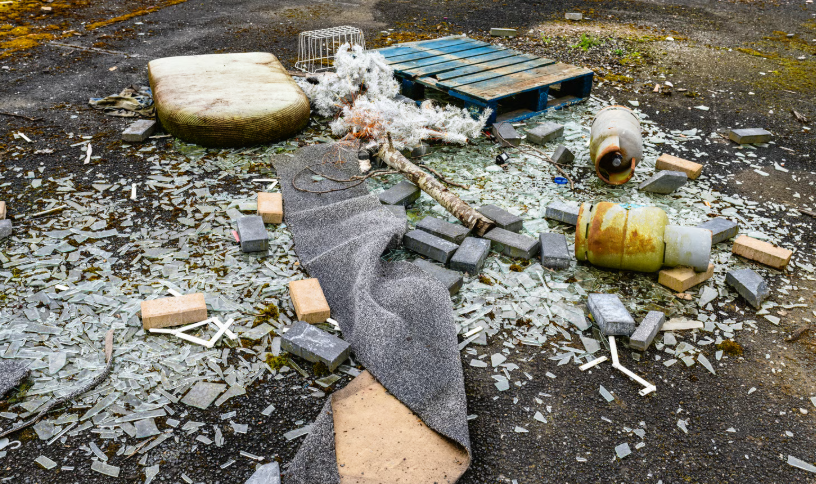
A new report on hazardous fly-tipping in London has ranked Ealing among the boroughs with the lowest rates in the capital.
Figures based on data from the Department for Environment, Food and Rural Affairs (Defra), analysed by BusinessWaste.co.uk, placed Ealing 24th out of 33 London boroughs for incidents involving potentially dangerous waste.
Hazardous fly-tipping involves the illegal dumping of dangerous waste — such as asbestos, chemicals, oils, fuel and clinical materials — which can pose risks to public health and the environment.
The borough recorded 12 hazardous fly-tipping incidents in 2024/25 — equivalent to 0.31 per 10,000 residents — out of 25,394 reported cases overall. Hazardous materials accounted for 0.05% of all incidents.
Neighbouring boroughs showed a mixed picture. Hillingdon recorded a higher rate of 1.94 incidents per 10,000 residents, while Harrow and Brent recorded lower rates of 0.07 and 0.06 respectively. Hammersmith and Fulham was one of two councils in London with no hazardous fly-tipping incidents recorded.
At the other end of the scale, Haringey recorded the highest rate in the capital, with 465 hazardous incidents — or 17.62 per 10,000 residents — the highest per capita level in England.
Across London, there were 481,088 fly-tipping incidents in total during 2024/25, close to one every minute.
Mark Hall, a waste management expert at BusinessWaste.co.uk, said: “All illegal waste dumping is damaging to the environment and local community, but hazardous waste is particularly concerning as it contains toxic, persistent, or reactive materials.
“Substances such as asbestos, oils, chemicals, and fuel are not only more toxic but also often require specialist handling and disposal. When dumped illegally, they can contaminate soil and water, release harmful particles into the air, and create safety risks for both the public and council workers.”

