

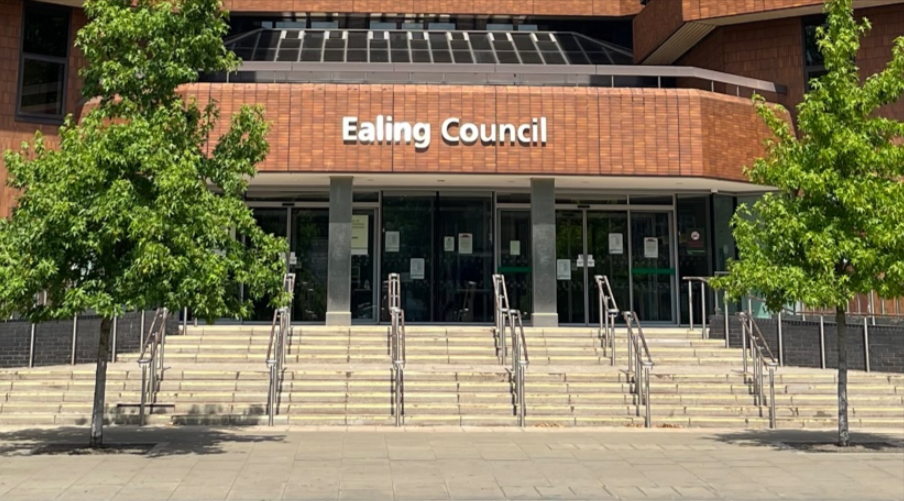
A freedom of information request has revealed that over the last three years, Ealing Council has spent £105m on providing temporary accommodation for people which included using hotels and bed & breakfast.
Figures obtained by Personal Injury Claims UK found that in 2023/24, the council spent £37,870,323 providing temporary accommodation for 3,013 households.
The number of households in Ealing living in temporary accommodation in 2022/23 was 2,540 costing £33,414,791 while in 2021/22 it cost £33,728,711 for 2,295 households.
The need to offer temporary accommodation, which includes hotels and bed & breakfast, follows a rise in recent years of people being made homeless from not being able to afford rent through to landlords deciding to sell their properties.
Speaking to EALING.NEWS, an Ealing Council spokesperson said: “All councils’ finances are now in a deeply perilous position, and that is in part due to the spiralling cost of supporting people who are homeless. This is particularly the case in London, where councils are collectively spending £4m a day preventing homelessness.
“In recent years, we have seen unprecedented numbers of residents reaching out to ask for help with emergency housing. The number of households we have placed in temporary accommodation (TA) has risen steeply in the last 2 years, and on average each month we are temporarily housing around 3,000 families.
“With beautiful open spaces, outstanding schools, and fantastic transport links, our borough is a highly desirable place to live, and Ealing’s population increased by 15% between 2013 and 2023. However, a ‘double-whammy’ of increased demand and reduced supply has made it one of the least affordable places for housing in London. We are at the sharpest end of the national affordable housing crisis.
“Since 2018, private rents have almost doubled in some areas. This is partly because changes to tax rules, buy-to-let mortgages, and lettings laws have led to many landlords leaving the market. The total number of 1 to 4 bed private properties available to rent across London has dropped by more than 40% since 2017. Combined with steep inflation in 2022-23 and the previous government’s freeze in local housing allowance, the majority of the remaining privately rented homes are unaffordable for low-income households.
“Council rents are on average a quarter of their private equivalents. But with almost 3,000 local families on the waiting list for social housing, there simply aren’t enough homes to go around.
“We have historically had great success in reducing the number of families temporarily housed in bed and breakfasts (B&Bs). In March 2022, placements were at their lowest level since 2014, thanks to the council helping to prevent residents from becoming homeless by finding them a home in the private rented sector. It has one of the best records among local authorities in London for homelessness prevention. But, despite that, the numbers of residents who need help are now so overwhelming that the B&Bs are full, and the council has had to resort to housing families in expensive commercial hotels. The expense of doing so has mushroomed in recent years. The council’s enforced monthly spend on commercial hotels alone increased 50-fold between November 2022 and June 2024.
“The budget for temporary accommodation is just over £13m for 2024/25 – an increase of £3.06m or over 23% from the previous year. The quarter 2 forecast for this year is for this budget to be exceeded by a further £9.06m, which is a 222% increase on the 2023/24 budget. The cost of temporary accommodation is now a real threat to financial resilience in all London boroughs and beyond. Although the government announced £233m for homelessness prevention, this is not additional money – it replaces funding we had previously expected to end.
“In response, we are working in several ways to drive down the numbers of people in temporary accommodation. The first step was to listen to households in TA to better understand their needs and explore permanent housing options. We have rapidly moved people from commercial hotels into more suitable B&Bs – from a peak of 278 households on 13 March this year to 18 households on 20 November. We are also looking to then get families out of those B&Bs into even more suitable accommodation. For example, we are working to bring empty council homes back to use as quickly as possible, offering households secure tenancies in them. We are also focusing on helping some families resettle outside the borough, in places where they can better afford to live, and we are helping to prevent other families from becoming homeless in the first place, by enabling them stay in their privately rented properties.
“Earlier this year we approved a new plan to invest £150m in new temporary accommodation in the borough. We are also running one of the biggest council homebuilding programmes in the country.”

