
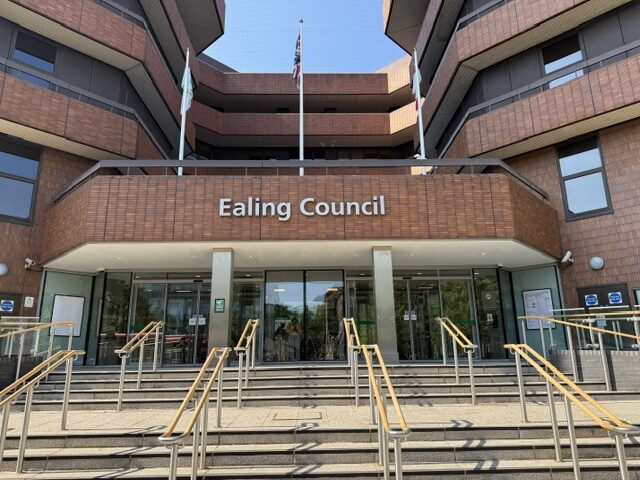
A new report has revealed that adult safeguarding concerns in Ealing have risen by almost 16% over two years. The findings highlight delays in the way Ealing Council’s adult social care service handles safeguarding referrals, while the report warns that resources are failing to keep pace with demand.
The Ealing Safeguarding Adults Board Annual Report 2025/26, which will be discussed by Ealing Council’s Health and Adult Social Services Scrutiny Panel on Tuesday (17 November 2026), shows that 1,879 safeguarding concerns were recorded during the year, compared with 1,725 in 2024/25 and 1,621 in 2023/24.
The number of people subject to formal safeguarding enquiries also rose over the last year, from 516 being made in 2024/25 to 603 in 2025/26.
Safeguarding concerns involve adults with care and support needs who may be at risk of abuse or neglect. Formal enquiries under Section 42 of the Care Act investigate those concerns and determine what protection is needed.
The report does not establish what has caused the increase in safeguarding concerns but highlights issues with Ealing Council’s Adult Social Care service.
In its Challenges and Barriers, the report said: “Learning from safeguarding activity identified challenges within the Adult Social Care referral pathway. Partners highlighted delays in processing referrals, limited feedback on outcomes and differing interpretations of safeguarding thresholds.”
It adds: “High demand and increasing service pressures contributed to referral backlogs and impacted the timeliness of responses.”
The report does not specify how many referrals were potentially affected by the backlogs or how long people waited for their concerns to be processed.
Women also accounted for more safeguarding concerns than men, with 922 recorded for women and 760 for men across the four main age groups reported.
Health professionals were the main source of safeguarding concerns, with hospital and other secondary healthcare staff accounting for 407 referrals and primary and community healthcare staff accounting for 254. Police accounted for 183 referrals, while 101 came from family members.
Neglect and acts of omission were the most commonly recorded forms of abuse, recorded 290 times and accounting for 38% of all abuse types identified during safeguarding enquiries.
Psychological abuse accounted for 102 instances, while financial or material abuse and physical abuse were each recorded 101 times. Self-neglect was recorded 99 times.
Other recorded types included domestic abuse (32), organisational abuse (17), sexual abuse (12) and modern slavery (1). An individual enquiry could involve more than one type of abuse.
People’s own homes were the most commonly recorded location of abuse, accounting for 414, or 59% of all locations identified during safeguarding enquiries. Nursing homes accounted for 94 and residential care homes for 90, around 13% each.
The report said: “Neglect and acts of omission continue to be the most commonly reported form of abuse across the borough, with an individual’s own home remaining the primary setting where abuse occurs.”
Robert McCulloch-Graham, independent chair of Ealing Safeguarding Adults Board, warned in the report that demand for services remained high despite continuing changes across health, social care and policing.
He said: “Structural change is continuing, while service demand remains high with resource levels that do not match that demand.”
He added: “These factors require an innovative and urgent response to mitigate the risk that their mismanagement, would inevitably pose to the welfare of those in need within our communities.”
Despite the pressures, the report also highlights improvements made by Ealing Council’s Adult Social Care service and its partners.
It says a Front Door Task and Finish Group, involving adult social care, health partners and police, worked to address delays, improve information sharing and make safeguarding referrals more efficient.
According to the report, this resulted in “more efficient processes and improved outcomes for people requiring safeguarding support”.
The report also highlights the case of a woman living alone with poor physical and mental health, alcohol dependency and unsafe living conditions. Following a fall and hospital stay, a safeguarding enquiry brought together health and social care professionals, who arranged support including an emergency alarm, a deep clean of her home and specialist services. The woman became more engaged with support and was able to continue living safely at home, as she wished.
It also showed improvements made in the cooperation between the Metropolitan Police, adult social care and West London NHS Trust, with the trust reporting that a previous backlog of police notifications had been eliminated.
Discussions have also taken place about developing an Adult Multi-Agency Safeguarding Hub to strengthen early intervention and support for adults at risk.
Financial pressures remain a concern. The safeguarding board received £83,566 in contributions from Ealing Council, health services and police during 2025/26, against expenditure of £128,366.
The resulting £44,800 shortfall is met annually by Ealing Council.
The report said: “The recurring shortfall underscores the importance of reviewing the Board’s funding arrangements to establish a more equitable long-term financial position.”
Councillors on the scrutiny panel will be asked to consider the annual report and make recommendations for further improvements to adult safeguarding arrangements across the borough.

