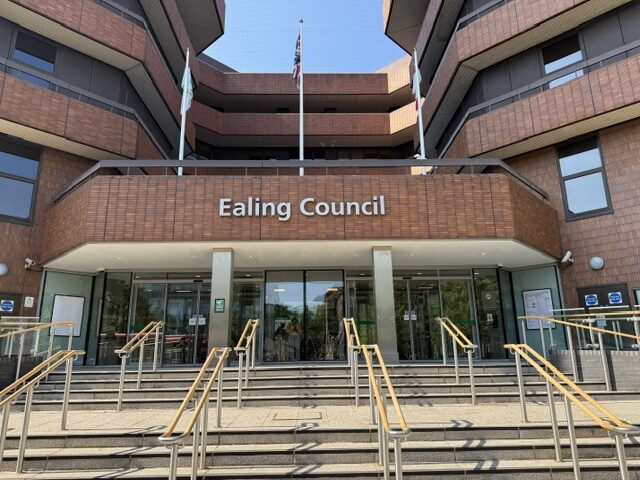
The number of licensed houses in multiple occupation (HMOs) across Ealing has risen by 38% in less than three years, with Ealing Council inspections uncovering thousands of housing hazards.
There were 3,789 licensable HMOs in August 2026, compared with 2,746 in October 2023, according to a report going before Ealing Council’s Overview and Scrutiny Committee on Thursday (22 October 2026).
Labour-run aling Council is considering renewing its licensing scheme for smaller HMOs, which house three or four unrelated people, for another five years from April 2027. A public consultation closed last month (24 September 2026).
Inspectors discovered 4,890 hazards during visits to 903 HMOs between April 2021 and April 2026, with problems found in almost two-thirds of properties inspected.
Fire safety problems accounted for 73% of recorded hazards, followed by damp and mould at 8%.
At one property, inspectors found missing smoke detectors and fire doors, a bedroom without a window and a fridge-freezer obstructing the main escape route. The council refused its HMO licence.
In its licensing consultation document, Ealing Council said: “The proportion of HMOs failing to meet the required standards is alarmingly high.”
A report commissioned by Ealing Council estimates that 1,378 known HMOs have at least one serious housing hazard.
It also found that Acton has the highest number of known HMOs, with 1,347 properties, followed by Ealing (1,162), Southall (599), Greenford (350), Hanwell (245), Perivale (229) and Northolt (169).
Between April 2021 and April 2026, 3,649 antisocial behaviour incidents were recorded at known HMO addresses, including 2,004 waste-related incidents and 767 noise complaints.
The council says it also plans to improve coordination between its planning and licensing teams and develop clearer planning guidance for HMOs.
Councillor Flora MacLoughlin, Ealing Conservative deputy leader and North Greenford councillor, told EALING.NEWS ahead of Thursday’s Overview and Scrutiny Committee meeting: “The figures are alarming, yet Ealing’s answer is more licensing. The previous scheme has plainly failed to protect neighbouring residents. More paperwork will not fix a problem that runs much deeper.
“HMO proliferation serves neither the communities forced to live alongside it nor the tenants living in substandard accommodation. A borough should be protecting family housing and the character of its residential areas, not merely managing the consequences of its own failure.”

 across Ealing has risen by 38% in less than three years, with council inspections uncovering thousands of housing hazards)