

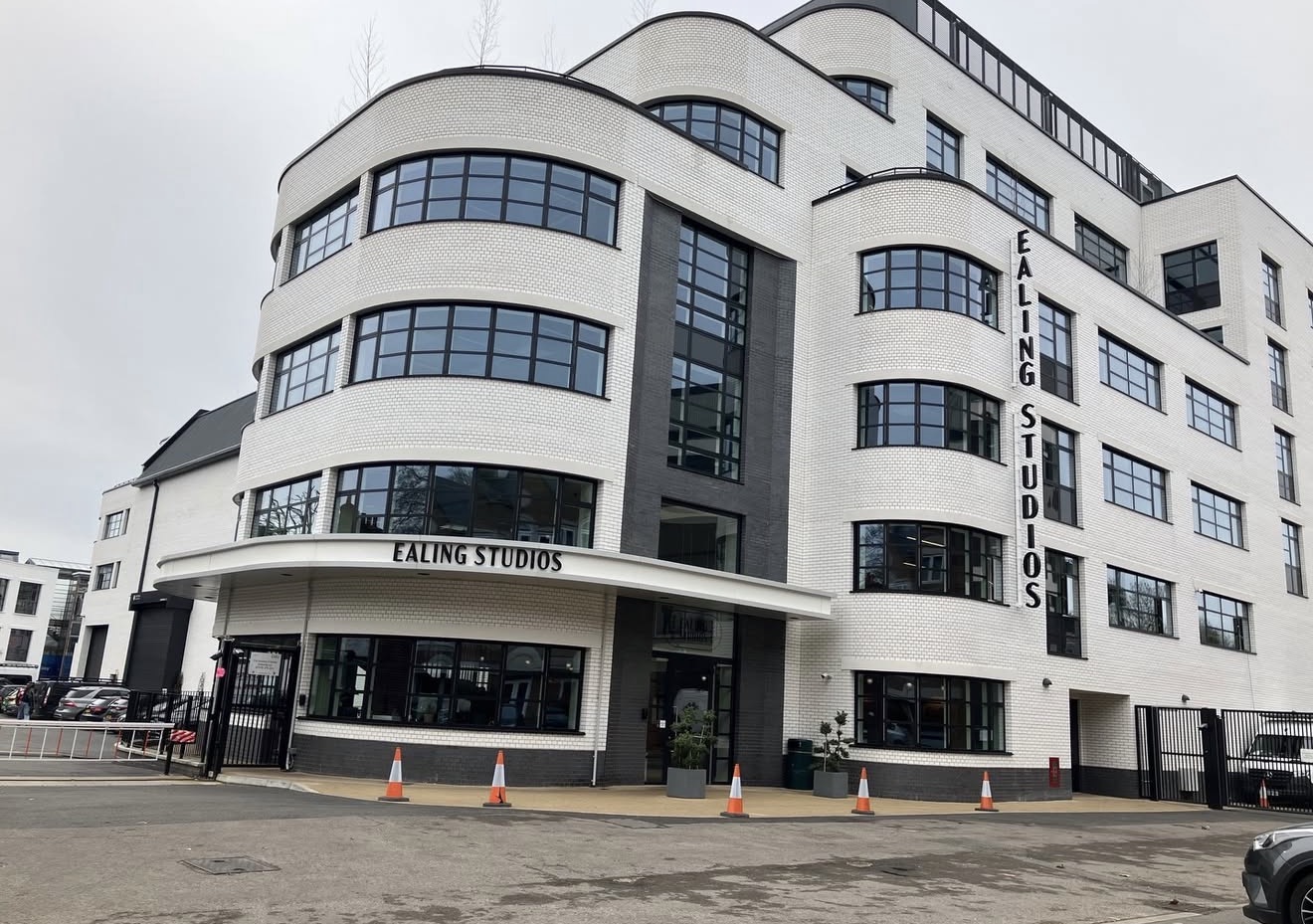
Ealing is at the centre of a west London screen industry worth billions to the UK economy and supporting thousands of jobs, new research suggests.
The report, West London Screens: The Hidden Engine of the UK’s Convergent Screen Industries, launched at Ealing Studios, describes the area as a key hub for film and television production, linking everything from commissioning and finance to post-production, visual effects and studio space.
More than 6,000 companies operate across the area, generating over £70bn in turnover, the study estimates. Rather than competing with other parts of the UK, the network is said to support productions nationwide. Recent projects linked to west London include Bridgerton, The Crown and The Lord of the Rings: The Rings of Power.
Ealing Studios — often described as the world’s oldest continuously working film studio — remains a focal point within a wider cluster spanning nine west London boroughs.
Professor Emily Caston, director, PRISM, University of West London, who led the research, said the findings pointed to “a convergent ecosystem of extraordinary depth and reach — spanning film, TV, advertising, games, live events, post-production and visual effects — that is shaping screen culture globally”.
She added that the scale of the sector “demands serious attention from investors and policymakers alike”.
The report also highlights mounting pressures. Rising costs, the loss of workspace — particularly in parts of Soho — and a shortage of freelance workers are all cited as risks. The industry is also exposed to international tax incentives and shifts in US commissioning.
Peter Mason, leader of Ealing council, said the borough had long played an “outsized role” in the sector, pointing to its studio heritage and newer facilities. He said the industry had delivered “good quality jobs for our residents for decades” and described west London as “a global film and TV destination” as well as a key part of the UK’s production supply chain.
He added that closer collaboration across boroughs and with industry partners would be needed to sustain growth and ensure more local people can access skilled work.
Matthew Carpen, chief executive of the Old Oak and Park Royal Development Corporation, said the research “shines a light on the scale and importance of West London’s film industry — driving jobs, innovation and global influence”. He said regeneration plans in the area were intended to support further growth while “creating exciting career paths for local people”.
The report calls for further investment in skills, support for freelancers and formal recognition of west London as a distinct national screen industry cluster.

