Labour-run Ealing Council has voted through sweeping changes to how residents in the borough can raise petitions and have them debated, sparking concerns from residents and opposition parties who say the reforms could stifle community voices and reduce democratic accountability.
Under the newly approved rules, only petitions signed by at least 1% of Ealing’s population – equivalent to 3,671 signatories based on the 2021 Census – will now be eligible for debate at full council meetings. Previously, the threshold stood at 1,500 signatures, or just 750 for issues affecting a single ward.
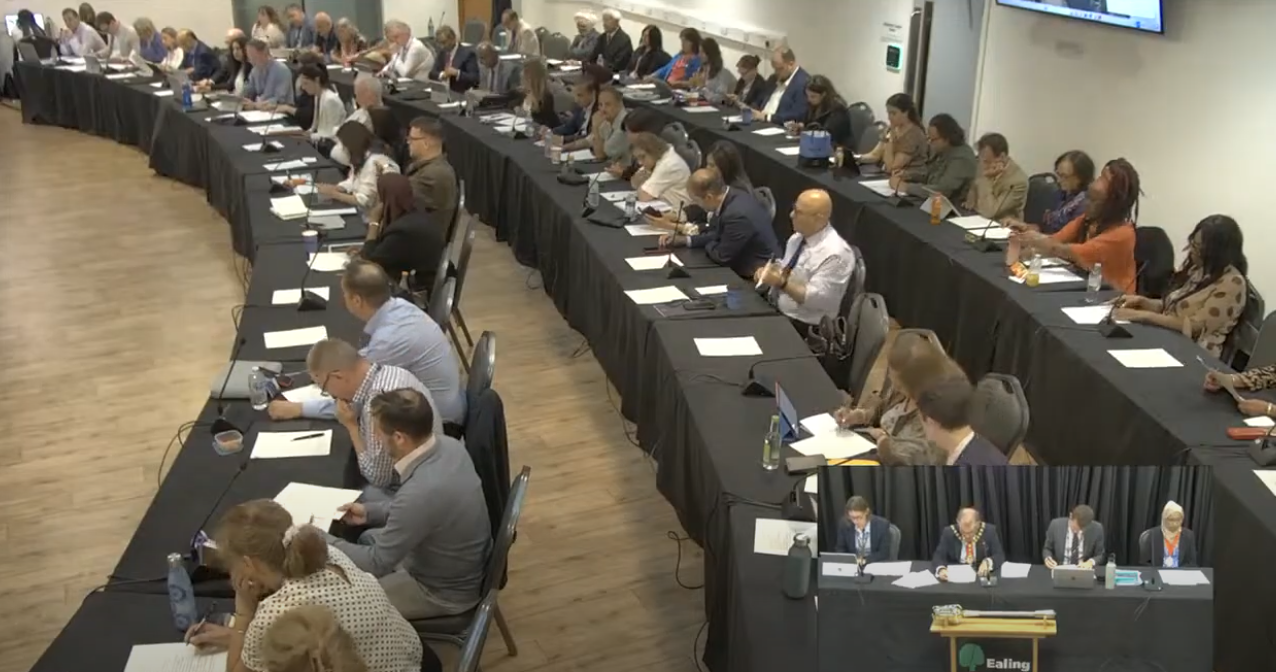
Of the 70 councillors eligible to vote on the proposed changes, 51 were in favour, eight opposed, and one abstained. There were also a number apologies and absences from councillors who didn’t take part in the vote.
Data released by the council reveals limited uptake of the existing petition process: during the 2024/25 council year, only 30 petitions were created on its website, with just two out of four eligible petitions reaching the debate stage.
The council says the changes, approved at a full council meeting last night (15 July 2025), aim to ensure that only matters of borough-wide significance are brought before all councillors. But critics argue the steep rise in signature requirements risks marginalising local concerns and discouraging civic participation.
Speaking to EALING.NEWS, Councillor Gary Malcolm, leader of Ealing Liberal Democrats said the move will make it “more difficult for residents and opposition councillors to scrutinise the council” and if they get into power would reverse the changes.
He said: “It was sad that the Labour-run Ealing Council forced through a decision to increase significantly the number of petition signatures needed to trigger a debate about the topic of a petition. Labour are also making sure that it is more difficult for residents and opposition councillors to scrutinise the council. Liberal Democrats would reverse these changes so people in Ealing can have more of a say.”
An Ealing Conservatives spokesperson told EALING.NEWS, the move by Ealing Council is “a blatant attempt to silence residents”.
They said: “We reject Labour’s attempt to silence residents by erecting new barriers to petitions and debate. Their plan to force residents to only use a council platform for petitions and to raise the threshold for triggering debates, is a blatant attempt to silence residents. A Conservative-run council would scrap these hurdles. Ealing Labour isn’t just ignoring residents, they’re actively trying to shut down their voices.”
An Ealing Council spokesperson told EALING.NEWS: “We are working towards a more transparent and straightforward petition scheme, with clear expectations of what will happen once a petition is submitted. There are four council meetings each year where petitions can be debated so we want to ensure they demonstrate a broad range of public opinion across the borough. The process in full council for debating petitions has not changed.”
The spokesperson added: “Requiring all petitions to be set up on the council’s system will make the process more fair, efficient, and transparent with all e-petitions in one place and the ability for signatures and addresses to be verified.”
On the question of increasing the threshold from 1,500 signatories or 750 signatories to at least 3,671 which some are accusing the council of using bureaucracy to erect barriers to engagement, the council told EALING.NEWS: “We proposed these changes to ensure any petitions debated at a full council meeting demonstrate a broad range of public opinion across the borough of Ealing rather than niche topics or issues that only affect small areas of the borough that are not relevant or appropriate to be debated by all councillors.”
Responding to concerns about raising the bar too high for residents, the council added: “It is important a petition considered at council is about an issue that is a genuine concern of at least one per cent of the borough’s population.”
“If a petition gets less than one per cent of signatories, the appropriate route is to raise a question at council. Smaller petitions to the council will be accepted and receive a response but will not be debated”
There were also changes to the way petitions can be submitted. From now on, all e-petitions must use the council’s own online platform. Petitions hosted on third-party websites, such as Change.org, will no longer be accepted.
Defending this move, the council argued that using a single system allows for greater transparency and security: “The council’s e-petition system makes it easier to see open e-petitions, is easier for residents to take part, ensures live data of petitions being considered are all in one place including if they are at the debate threshold, and helps support planning council meetings.
“It ensures signatures and addresses can be verified and do not get replicated, which isn’t possible when using multiple other platforms resulting in delays to managing the petition and affect the number of signatures considered as valid. Having one system is the fairest, most efficient, and most transparent way of managing petitions submitted to the council. This approach is no different to that of the UK parliament.
There have been concerns raised by residents that the changes are being implemented without a public consultation.
The council said: “There is no requirement to carry out a public consultation, however, the proposed new scheme was consulted on with all political groups at the council and a benchmarking exercise was carried out across London before drafting the new scheme.”
When asked what benefits the revised policy would bring to residents, the council claimed it would result in “a more transparent and straightforward petition scheme, with clear expectations of what will happen once a petition is submitted.”

